Add it to a motor oil that meets the latest API specification and you have a premium oil: extra detergents, extra dispersants, corrosion inhibitors and SFR's extreme-pressure package. No sulfur or phosphorus.
Every certified motor oil meets the same specification, and nothing pays anyone to go past it — the rules let a brand say “exceeds,” never by how much. The base oil is the only real difference you can buy. SFR adds what no specification asks for: an extreme-pressure barrier on the metal, plus more corrosion protection and more detergent. Read the whole answer
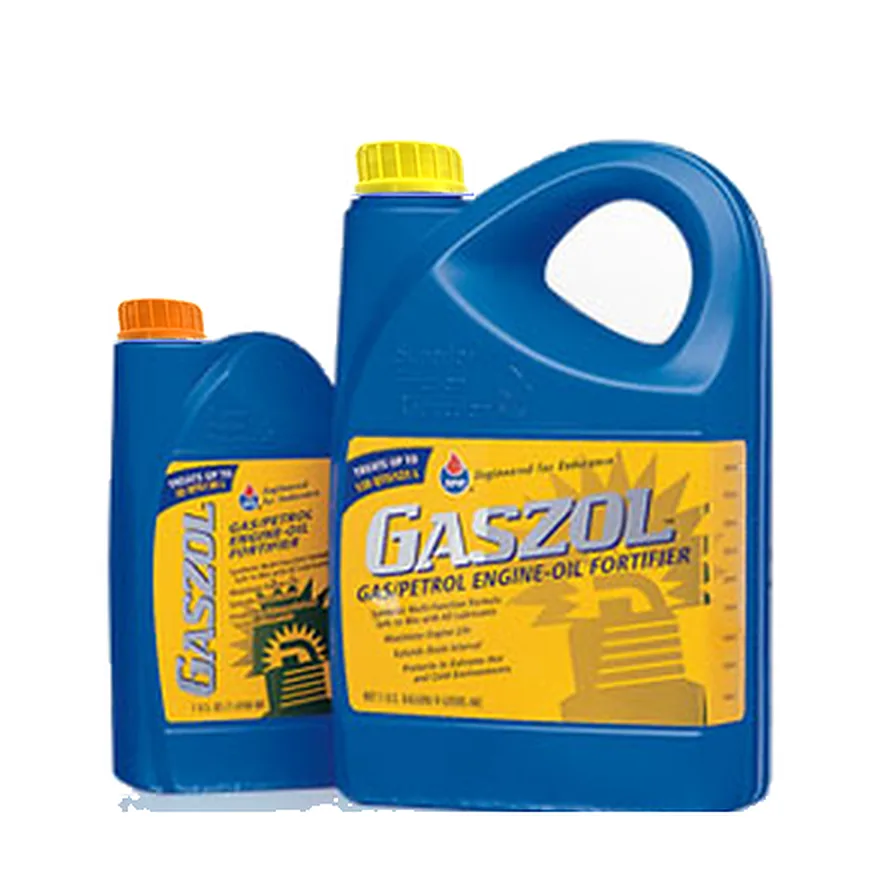
GASZOL synthetic oil fortifier was developed for the commercial and industrial markets. This includes emergency vehicles and pick up trucks larger than one half ton. The product is highly fortified with SFR's leading technology, which is unlike any other additive in the world. Designed specifically for the gasoline engine it provides ultimate protection and is compatible with petroleum or synthetic motor oils. Add it to a motor oil that meets the latest API specification and you have a premium oil: extra detergents, extra dispersants, corrosion inhibitors and SFR's extreme-pressure package. GASZOL contains no sulfur or phosphorus, so it is safe for catalytic converters.
Generally speaking, all motor oils fail to provide protection on a four-ball extreme pressure test D-2783 beyond 200 kilograms. GASZOL goes an astonishing 800 kg. The advantage is in the areas of an engine that experience extreme pressure such as the valve train, valve lifters, push rods, valve stem tips, and parts of the rocker arms. Also, GASZOL contains a comprehensive package to extend drain intervals and engine life.
GASZOL provides maximum protection especially in commercial conditions such as towing, heavy loads, stop and go driving, and other severe conditions such as emergency vehicles. SFR has had almost a 20 year history in racing and has achieved phenomenal results in both on and off road racing.
Gaszol can be used in all gasoline and propane engines. Use 1½ oz per quart of oil (5%) the first time and 1 oz per quart (3%) at each oil change after. Gaszol is compatible with most all synthetic and petroleum based lubricants. There is no sulfur or phosphorus in Gaszol, so it is safe for catalytic converters.
Gallons and Five (5) gallon pails come with a one-ounce pump for easy measuring. Gallons also have a view stripe with measuring grid in ounces on the label for measuring larger quantities for quick use.
INTERNATIONAL: Use 120-200 mL per 4 liters. 4 Liter and 19 Liter pails come with a 30 ml pump for easy measuring. 4 Liter containers also have a view stripe with measuring grid in milliliters on the label for measuring larger quantities for quick use.
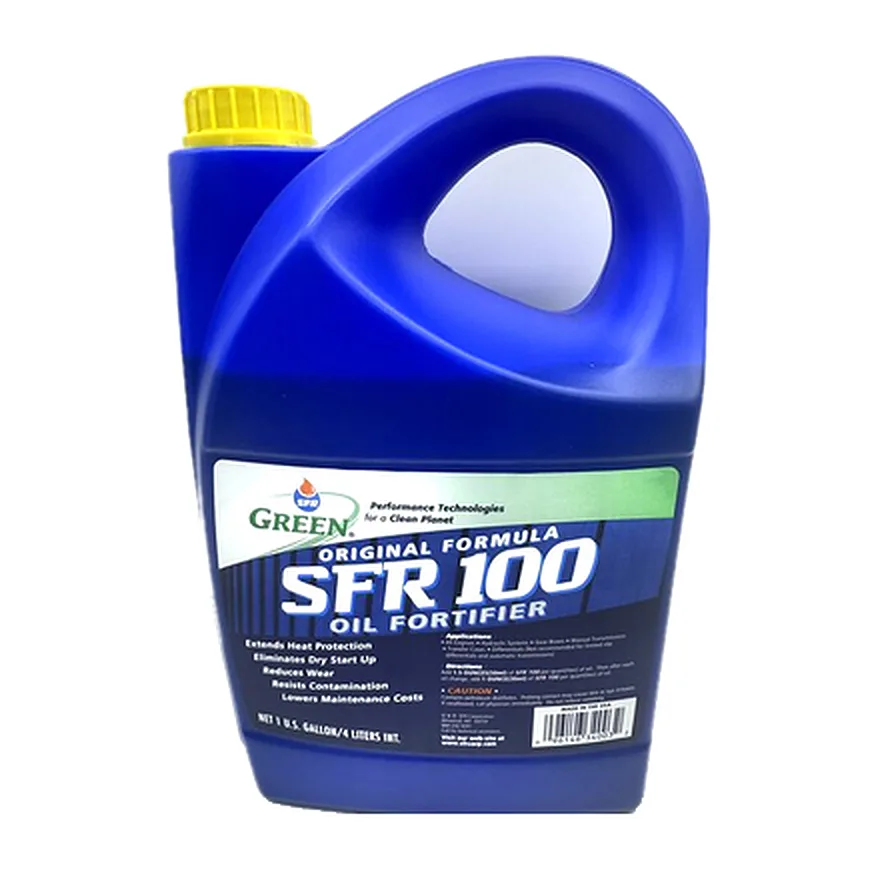
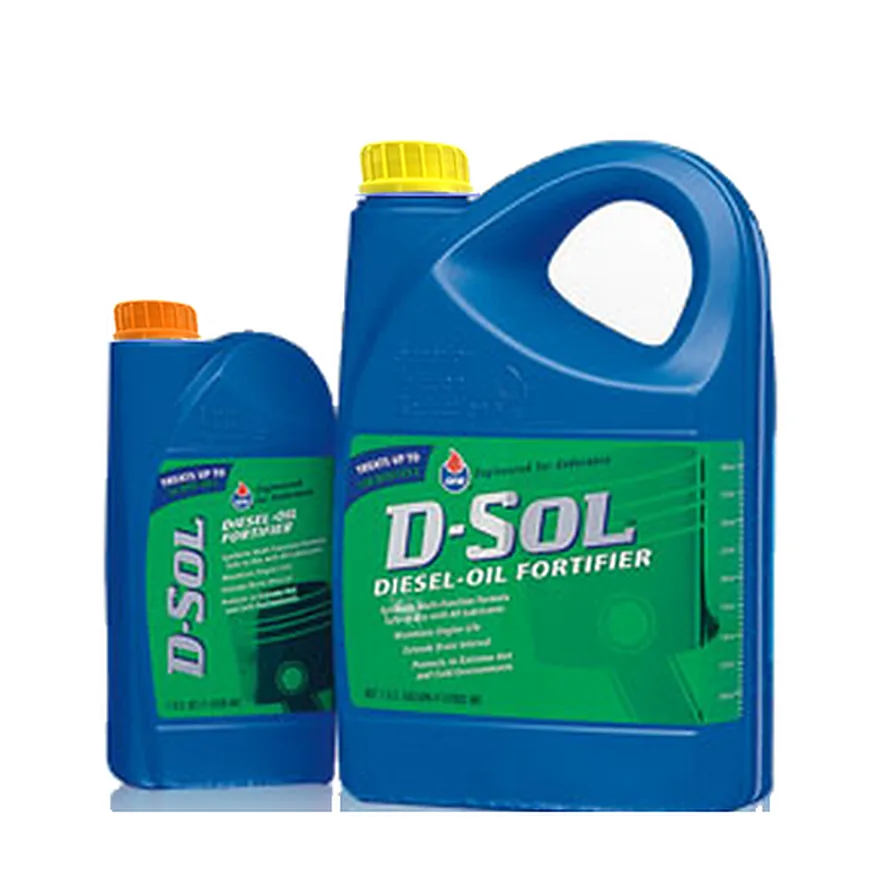
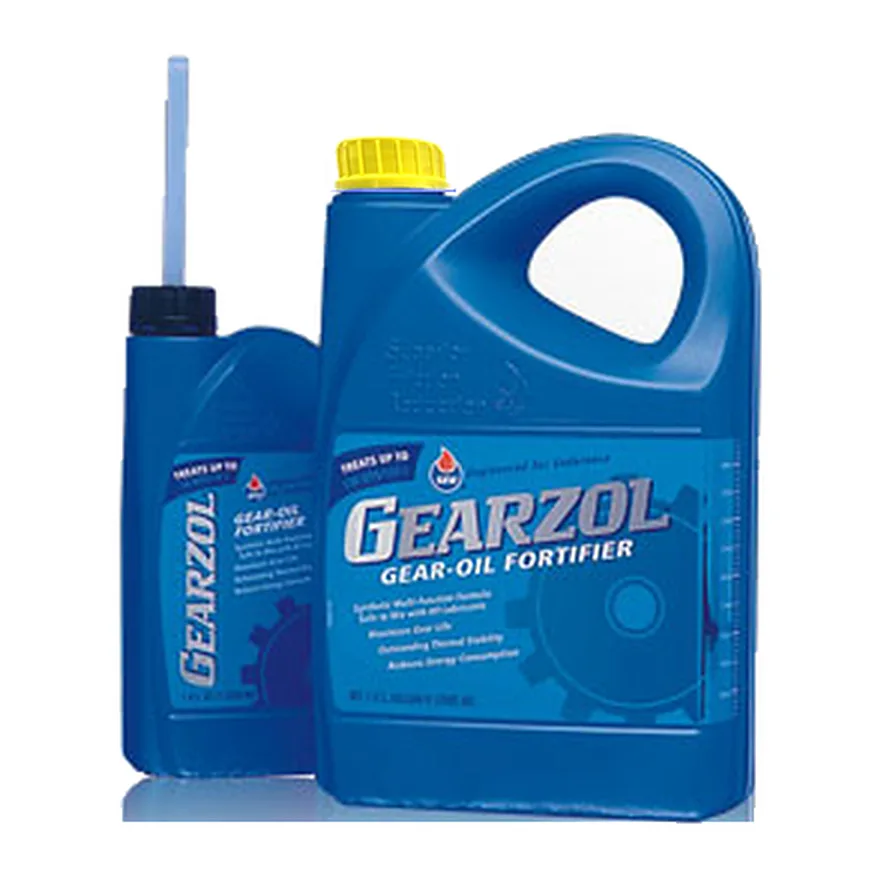
This question gets asked a lot and deserves some attention. Originally when we developed SFR 100 in 1988 the additive market was just developing around extreme pressure agents. EP additives were deemed necessary but not found in most all oils. Gear oil and metal working applications were the only place they were being used. Thus, most formulations for oil fortifiers were fairly simple as this industry category developed. Technology has increased at an extremely rapid rate. With highly specialized engines and equipment, customers are demanding greater performance. With this improved performance comes the added stress on the engine or machine. Marketers in the additive treatment industry have focused entirely on the extreme pressure agents and thus most formulations are based on only one main ingredient, figuring motor oil would suffice in the other areas, such as: oxidation control—the life of the oil, corrosion protection—caused by high heat and contaminants, detergency to keep these high performance engines etc. clean, friction modifiers to aid in metal to metal contact that is not extreme but does cause wear, thermal stability under high heat and heavy loads—called shear stability in the industry. At SFR we have always looked at every possibility to improve engine and equipment performance. This led to a multi-functional approach to maximize performance. In other words not just concentrating on extreme pressure but all of the lubrication needs. In doing this the more simplistic formulations like SFR 100 had to give way to more specialized and complex formulations. Making only one product to use in all applications could still be done, but certain additives had to be left out, and others might not aid in friction reduction. For example, in an engine if a cracked headliner occurs or a blown head gasket, water and anti-freeze are injected into the motor oil. With motor oil, which floats on water, immediate seizure of the engine is inevitable. With SFR 100, the product was developed to be heavier than water, thus staying on the metal and emulsifying thus mixing with the water and anti-freeze to provide film strength. Though this saved many an engine, in a compressor where water from condensation is manufactured every day, this was not a desirable characteristic. With a compressor you want to de-emulsify so that you can separate the oil from the water and not have to change the oil regularly. As we investigated, we found more and more situations like this. Would it be easier to make only one product? Of course, but with the sophistication of equipment today, we had to look at specializing in each equipment group. This included: Gasoline Engines, Diesel Engines, Hydraulics, Compressors, and Gear Boxes. We found that we could make much more effective products and include more additives when we formulated with this approach. Testing has shown that by concentrating on one specific category such as gasoline engines, we could make a product to make the gasoline engine perform at its highest level possible. And the same for gear boxes etc. We could even add warranty packages to meet warranty requirements along with our proprietary additives. Thus at SFR we not only concentrate on treating the metal, but the oil as well and for each type of equipment that quite frankly requires different additives. In addition, we have developed synthetic products with improved properties over the SFR 100, which is a petroleum based product. We encourage all of our loyal customers and distributors to move to the synthetic products, which is the future in the lubricant industry when it comes to performance.
Synthetic motor oils perform better than conventional petroleum oils, and every certified oil today meets the same latest API specification. What that specification does not call for is extreme-pressure agents, and in our testing the certified oils do not carry them. Add GASZOL to a latest-spec motor oil, synthetic or petroleum, and you have a premium oil: extra detergents, extra dispersants, corrosion inhibitors and SFR's extreme-pressure package. It contains no sulfur or phosphorus, the chemicals that damage catalytic converters, so it is safe for new cars.