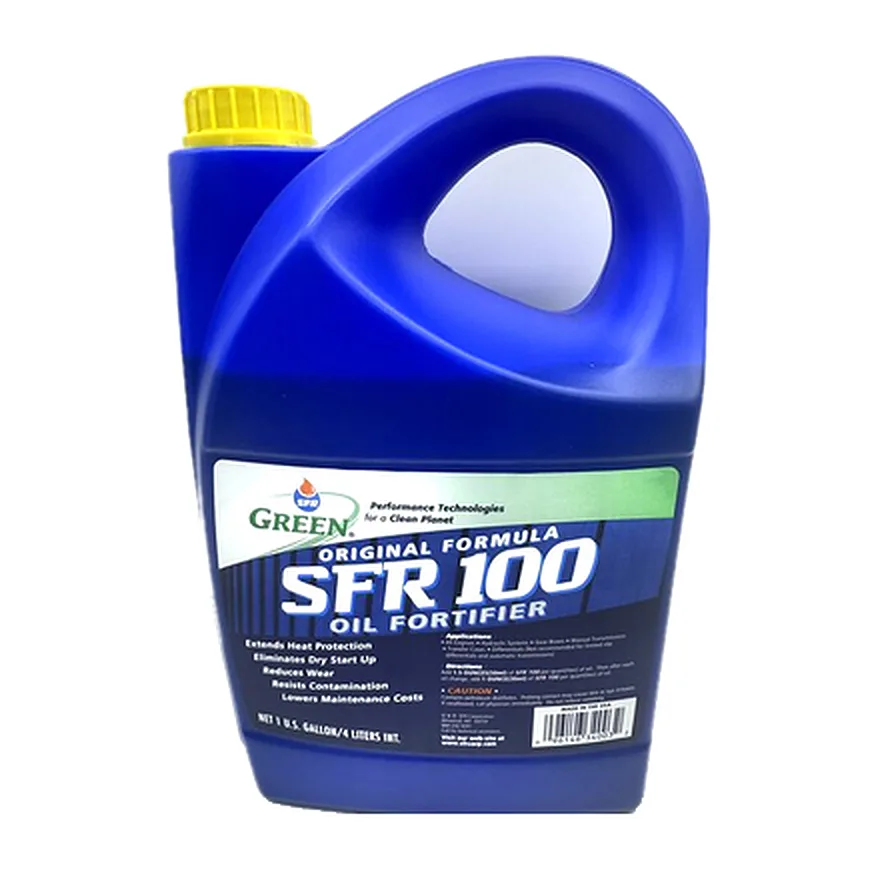
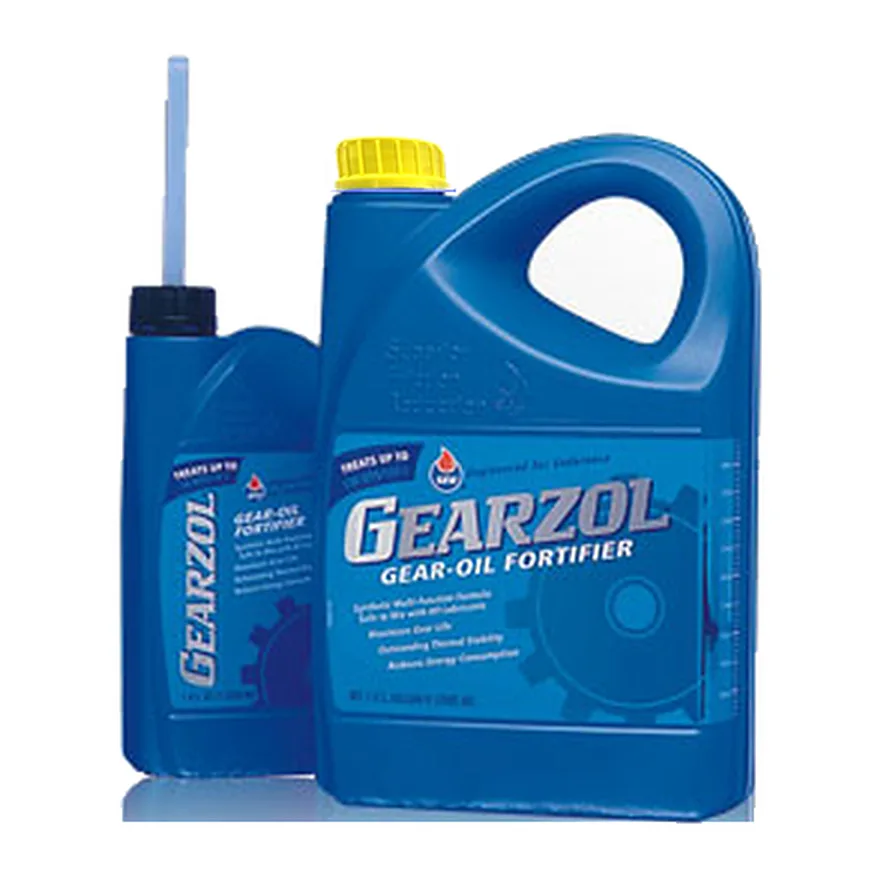
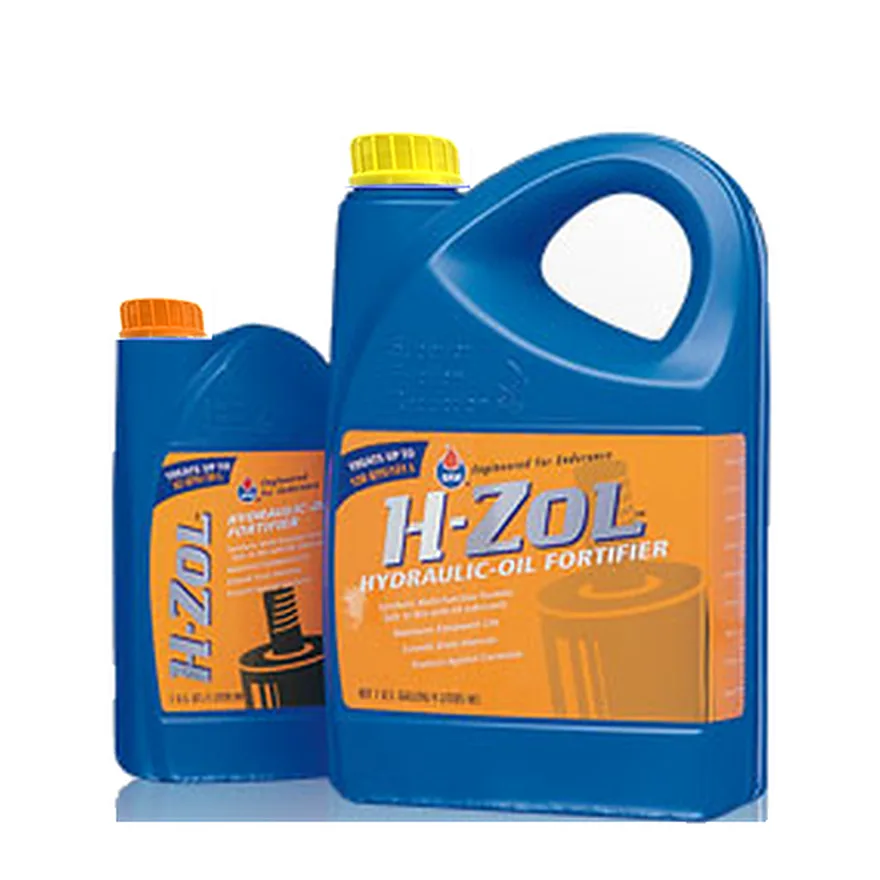
SFR 100 is the original SFR oil fortifier developed in 1988 as the only fully fortified product on the market.
Every certified motor oil meets the same specification, and nothing pays anyone to go past it — the rules let a brand say “exceeds,” never by how much. The base oil is the only real difference you can buy. SFR adds what no specification asks for: an extreme-pressure barrier on the metal, plus more corrosion protection and more detergent. Read the whole answer
SFR 100 is the original SFR oil fortifier developed in 1988 as the only fully fortified product on the market. Based on extreme pressure agents as its main technology, SFR actually contains many more additives to improve a lubricant's performance. These include detergents, dispersants, anti-oxidants, anti-wear agents, acid neutralizers, corrosion inhibitors, and as noted extreme pressure agents.
SFR 100 is petroleum based and developed for a wide variety of applications. It can be used in engines, hydraulics, gear-boxes, differentials, transfer cases, compressors and most anywhere lubricants are used. This technology has more testing than any other product that we have ever produced, not counting the millions of satisfied users. SFR 100 is not recommended for automatic transmissions that rely on friction. In hydrostatic drives and limited-slip differentials use it at 1%.
Today, as equipment has become more and more complex and sophisticated, newer technologies have been developed. See other industrial products for more information. If you want one product to use in all applications, then SFR 100 is the right choice and has been proven over many years by millions of users.
SFR 100 is the original SFR formulation engineered to be used in most all applications. Use 1.5 ounces (5%) with each quart of lubricant the first application. On subsequent applications use 1 ounce (3%) with each quart of lubricant. SFR 100 can be used in engines, hydraulic systems, gear-boxes, manual transmissions, transfer cases and differentials. In limited-slip differentials and hydrostatic drives use SFR 100 at 1% — they work on friction. SFR is not recommended in automatic transmissions that require friction. Gallons and Five (5) gallon pails come with a one-ounce pump for easy measuring.
Bearing weight loss 21.8 mg with 5% SFR 100 against 34.6 mg untreated — 37% less wear, and 45.5% inside the 40 mg API limit. Cleanliness 59.6 varnish / 58.9 sludge out of 60.
The L-38 is a standard American Petroleum Institute (API) engine oil qualifying test used for approving all lubricating engine oils that carry the API approval and signage. This test uses a copper/lead connecting rod bearing with no overlay to represent the extreme in corrosion sensitivity. This test is run under highly oxidative conditions with a leaded fuel, which stresses the formation of potentially corrosive materials. Inhibition against peroxide formation is important in passing this test.
A formulation, which passes the L-38 test provides a high degree of assurance against bearing corrosion. The L-38 also assess shear stability. The 100° C viscosity of a used oil sample taken at ten (10) hours should remain in the same SAE viscosity grade as the unused oil. Fuel contamination is removed before the viscosity is determined.
According to the American Society for Testing and Materials (ASTM) Method D 5119-95, the test is designed to evaluate an oil "for protection against engine and oil deterioration under high temperature, heavy duty service conditions." The test method can also be used to evaluate the viscosity stability of multi-viscosity oils. The objective of the test is: "to evaluate a lubricant's performance in combating copper/lead/tin bearing corrosion and to measure viscous shear stability." This test uses a 42.5 CID carbureted, single cylinder, spark ignition, CLR oil test engine.
The engine runs forty (40) hours using a Phillips' SOLTROL-10 standard leaded iso-octane test fuel. The engine is shut down every ten (10) hours for an oil level check. Engine speed is maintained at 3150 rpm and the oil temperature is raised to 290° F (143° C) using an external oil heater circuit. Fuel contamination from blowby is intentionally introduced and monitored.
The actual measurements for rpm's, oil temperature and blowby are tabulated on page four of the test report. The combination of intentional fuel contamination, high continuous operational speeds and heating of the oil make this a particularly severe test. If an oil passes this test, it can be assumed to be suitable for API service with regard to bearing corrosion protection and viscosity stability. Other tests need to be carried out to complete the API certification process.
Since we are an additive company we have not developed a motor oil for certification, however this test is positive proof whether SFR 100 assists the motor oil chosen or not in improving performance. A formulation which passes the L-38 test cycle, provides the highest degree of assurance against bearing corrosion (chemical wear). The L-38, as the API standard, also assures shear stability of the candidate oil. The L-38 test has been used for some time to qualify engine oils for API service categories starting with API SE.
The L-38 has been recently changed and now uses un-leaded fuel, which is not as aggressive on bearing materials as leaded fuel is. Any engine oil formulation currently marketed with the API doughnut or starburst must have passed this test (at least for Society of Automotive Engineers (SAE) grade 5W-30 because the API allows "read across" of the 5W-30 results to other SAE grades). It is important to note that, due to quality variations, some oil formulas, which claim to have passed the test may actually fail if a retail sample is tested through the API audit procedures. SFR's use of an API licensed retail engine oil sample insures that the results are realistic and representative of quality levels that consumers see.
In this test, an oil must produce no more than 40 mg of total bearing weight loss and the stripped viscosity (measured after fuel contamination is removed or "stripped") must stay in the viscosity grade range as tested. The commercial motor oil used was a leading API-certified 10W-40, which is rated as producing a 34.6 mg total bearing weight loss according to the oil maker's own data. When the motor oil was treated with SFR 100 at the suggested rate of 5% by volume, the total bearing weight loss was reduced to 21.8 mg. The data describes a significant improvement of 37% over the untreated oil and fully 45.5% better than the API performance requirement of 40 mg.
This data demonstrates that, not only is SFR 100 non-corrosive but, it can actually reduce the corrosion that can be caused by even API certified oils for this category. The ten hour stripped oil viscosity stayed within the test oils SAE viscosity grade. These results support SFR 100's ability to offer increased protection from corrosive wear even in an extremely severe engine environment without adversely affecting the nominal viscosity of the treated oil. These detailed results were produced by an API- and ASTM-certified independent laboratory.
These corrosion and viscosity results complement the existing corrosion data in the SFR 100 Technical Data and the viscosity data on the SFR 100 Product Sheet. The test results also show that the oil treated with SFR 100 will not produce deposits in the form of sludge and varnish. A perfect score for cleanliness is 60, SFR 100 treated oil received almost perfect scores of 59.6 for varnish deposits and 58.9 for sludge deposits. The lack of piston and ring deposits and the fine condition of the bearing is apparent from the photographs below.
Additional oil analysis testing performed at an independent oil-analysis laboratory determined that the Total Base Number (TBN) of the SFR 100 treated oil ended up at a healthy 6.7 following the demanding test. This TBN represents a decrease of only 0.7 from the untreated reference of 7.4! TBN is the alkalinity reserve provided by an oil which protects against acidic corrosion. The majority of the printed test report details the control parameters of the test.
The test parameters were maintained with the required control limits, which means that the data is valid and usable. In conclusion, this industry standard report documents that SFR 100 is capable of reducing corrosive wear up to 37% in modern engine oils. This reduction in wear will significantly extend the usable life of bearings and other critical and wear sensitive engine components. This report refutes any concerns that potential customers may have or that may have been raised during sales presentations regarding the corrosion performance of the extreme pressure components of SFR 100.
SFR 100's formulation is optimized for multi-functionality, effectiveness, and safety. Competitive products, which are poorly formulated or optimized for only one function have not proven their corrosion protection performance in this industry standard engine test. Based on the oil analyses that we have done on competitive products, it is possible that many of them would fail if subjected to this test due to a lack of corrosion inhibitors and alkalinity reserve. Competitive products that are particularly viscous or thick may also fail the viscosity requirements of the test.
For a full copy of this report contact sfrcorp@sfrcorp.com.
This is the wear test a motor oil must pass to be certified for API warranty service. SFR 100 at 5% in an already-certified 10W-30 — the best-selling motor oil in the U.S. at the time — cut cam lobe wear 41.43 → 35.62 microns (14% less), exhaust lobes 30% less, and wear-particle counts 11–98%, average 77% — SFR passed the wear test every motor oil must pass to be certified for warranty.
Summary and Analysis "This test method measures the ability of crankcase oils for spark-ignition engines to prevent cam shaft and rocker arm follower wear encountered during stop and go driving conditions and extended engine idling." The primary results include camshaft lobe nose wear, and scuffing of rocker arm pads. Secondary results include assessment of wear metal concentration and fuel dilution in the engine oil, as well as oil consumption (1).
According to the American Petroleum Institute's (API) motor oil guide: "Severe services operations include the following: Trips that are less than 16.09 kilometers (10 miles). Driving in dust or sand.
Cold weather, which prevents full engine warm up. Idling for extended periods. Pulling trailers. Operating in any other heavy-duty and severe services (2)."
It is easy to see how most of us drive under severe service conditions and how the KA24E test detailed here simulated this common yet demanding mode of operation for an engine. The KA24E test uses the modern 2.4-liter, fuel injected, overhead camshaft, 4 cylinder, 12 valve (2 intake valves and 1 exhaust value per cylinder) engine, which is run for 100 hours and then disassembled to take, wear measurements. Each hour of the test, the engine is operated at 800 rpm for 50 minutes and 1500 rpm for 10 minutes for a total of 200 cycles. The KA24E in one of the latest test that will be used to qualify the next generation of engine oils at the American Society for Testing and Materials (ASTM) SK/ILSAC GF-3 performance level.
ILSAC stands for the International Lubricant Standards Acceptance Committee. The KA24E test will be referred to as the CIA and will replace the wear portion of the CE test which was used to qualify earlier oils. All engine oils that are sold will eventually need to pass the KA24E test. Oil treated with SFR 100 has already passed with flying colors!
SFR chose to run the KA24E rather than the current VE because, according to industry statistics provided by the test's developers, the KA24E is approximately 3-3.7 times more reliable than the outdated VE. The use of the modern KA24E also insures that the data will remain usable for some time. SFR had two KA24E tests run back-to-back on the same Test Stand: Test number 80-9811-53-4 was run on untreated API-certified 10W-30 — the best-selling motor oil in the U.S. at the time — and test number 80-9811-52-3 was run with the same oil treated at the suggested rate of 5% by volume with SFR 100.
Test number 80-9811-53-4 appears in a separate companion document. The engine oil was purchased locally in Butte, Montana, off the shelf so it is exactly the same oil available to consumers. The effects of all variables, other than the additive itself, were controlled and minimized. By performing the two tests in this manner, maximum reliability was achieved and likely exceeded the industry average.
No deviations from the required control conditions occurred and no unscheduled shut downs occurred in either test. The fuel used in the test is an unleaded Howell VG fuel (Batch: 97-01035). Used oils analysis performed by an independent laboratory confirms that both tests experienced fairly significant fuel dilution (4.9%). The fuel dilution is intentional and is incorporated into he test to increase severity and to simulate stop-and-go driving with extended idling.
Driving under these conditions never allows the engine to completely warm up and evaporate any existing fuel contamination. The primary results of the tests confirm SFR 100's ability to further reduce wear in modern passenger car engines that are using the most current engine oils. The results of the test indicate that when the API-certified 10W-30 engine oil was treated at 5% by volume with SFR 100 and subjected to the KA24E test; average camshaft lobe wear was reduced from 41.43 microns to 35.62 microns, a reduction of 14%. These figures are taken from the tables on pages 3 and 4 of the reports.
The data on page 3 is a very short summary of the most important values determined in the test. The data contained in the chart on page 4 is a summary of the 84-profilometer scans appearing in Appendix A. Additional graphs appearing on pages 9-16 were not used to determine test results only to track key operating parameters for the transition (cycle 5 of 100) between medium and low speed operation. The wear reduction due to SFR 100 was more pronounced on the exhaust lobes (30% wear reduction) than on the intake lobes.
The overall reductions are graphically displayed on the Camshaft Lobe Wear Profiles appearing on page 5 of the test reports. These cumulative traces clearly show that SFR 100 reduces wear (the higher the curve, the greater the wear) on the leading and trailing edges of cam lobes where the transition between hydrodynamic and boundary conditions is occurring. The rocker arm pads are also visually examined and rated for signs of metal distress including scuffing, burnishing, scratching, pitting, and other forms of visible wear. "The rater is to determine which percentage of the rated pad area exhibits no contact."
Subtracting the percent are of no contact from the rated pad area, results in the percent wear area of contact for that rocker arm pad. Each rocker arm pad is rated for percent wear of contact. All twelve (12) individual pad ratings are averaged to determine the average contact area for the rest (1). Treatment of the engine oil with SFR 100 reduced this percent wear area of contact from 74.5% to 61.83%, a relative reduction of 17.3%.
These figures are taken from page 6 of the test reports. Based on the photos printed on the final page of the test reports, there is obvious evidence that the rocker arm pads from the test will run with 5% SFR 100 show reduced amounts of metal distress. These wear reductions figures may seem conservative but it is important to note that the test conditions do not involve high RPM's or high temperatures where SFR 100 really excels (as proven in the CRC L-38 Test). Also, NO engine oil sequence tests involve repeated starts, so start up wear is not examined.
The KA24E test only looks at valve train wear but there are certainly other areas of the engine, which will benefit from SFR 100. The used oil samples were sent directly to an independent oil-analysis laboratory where additional oil analyses were performed. The additional analyses performed at the laboratory revealed that much greater wear reductions were occurring in other areas of the engine. The particle counts and ferrography of the oils from both tests indicate that significantly fewer wear particles were formed with SFR 100 treated oil.
Reductions of contaminant particles varied from 11% to 98% and averaged 77%. Stated another way, engine oil treated with SFR 100 generated and circulated up to 44.7 times less abrasive contamination depending on the International Standards Organization (ISO) size category examined. The reductions in all size categories are tabulated and graphed below. Particle Counts (PC/ml) From Nissan KA24E
Ferrography is a magnetic and visual analytical method used to separate metal particles, contamination and other amorphous debris from and engine oil or other fluid. The ISO Particle Count (ISO Method 4406) above differs from ferrography because it is an automatic tabulation of ALL types and sizes of debris in a prescribed micron range within a given amount of a sample (1ml). Analytical ferrography, when applied to engine component wear, is the most powerful and definitive tool used to determine engine condition. As opposed to the important given in the particle count, analytical ferrography examines in microscopic detail the origin; metallurgy, volume and morphology of individual species or groups of wear materials.
The ferrographs displayed below clearly show the magnitude of difference between in both size and total volume of wear particles graphically demonstrate the wear reducing and engine life extending ability of SFR 100. Further confirmation of this contaminant reduction was obtained by examining the oil filters used in the test. The oil filters were cut open and the photos on the next page clearly demonstrate the cleanliness of the SFR 100 treated oil verses the untreated oil. It is the filter's job to trap these particles but the filter has limited capacity and can be forcedto circulate unfiltered oil if the media becomes clogged.
Clogging is even more of a possibility with the compact filters being used on modern vehicles. The photo also prove that the SFR 100 treated oil was not simply cleaner because more particles were trapped in the filter, fewer particles were generated overall! Untreated the oil Ferrograph SFR 100 Treated the oil Ferrograph Opened Filters Photographed by SFR
These extremely significant wear particle reductions correlate with reductions seen in other applications including industrial hydraulic systems. This data again confirms that SFR 100 will benefit equipment by the reduction of initial wear between moving parts and secondary wear between equipment parts and abrasive combination. This data confirms the real world effectiveness of SFR 100's wear reducing (EP/AW) and contaminant handling (detergent/dispersant) additives. Large amounts of research have been done and many Society of Automotive Engineers (SAE) papers have been written to assess the deleterious effects of particle contamination on the wear of components in, and the usable life of, internal combustion engines (3).
Although the research is primarily targeted at large, expensive, industrial diesel engines the results are translatable to consumer gasoline engines. Reductions in the overall size and number of wear particles contaminating a lubricant can be used to calculate equipment life extension factors. SFR 100 can and does reduce fluid contamination thereby extending equipment life. The Life Extension Method (4) is the best approach for accurately determining how much longer an engine will perform when particle contamination is reduced.
Developed by James Fitch of Diagnetics Incorporated (Stillwater, Oklahoma), this method gives and accurate view of the ability of an engine or other mechanical device to reach its maximum design life if the lubricant is maintained at a target level of cleanliness. In this specific instance, the untreated engine oil generated and ISO 21/15-cleanliness code. When the oil was treated with SFR 100 and run in the test, an ISO 19/10- cleanliness code was generated. Using Fitch's LEM, engine life is approximately doubled when particle contaminationlevels are reduced from ISO 21/15 to ISO 19/10.
These results also suggest the incredible benefits achievable when SFR 100 and SFR's BetaPure By-Pass Filtration System are used in combination for the absolute maximum in engineprotection and oil cleanliness. An interesting side note is that the KA24E test is designed to simulate stop-and-go driving and that the motor oil's own label claims to be "formulated for stop-and-go driving". Based on these test results, treatment with SFR 100 enhances that oil's performance in test designed to stimulate stop-and-go-driving. Also, most aftermarket oil additives claimto reduce wear; however, no other aftermarket additive has demonstrated a valid wear reduction in this test which is most modern industry standard engine wear test.
This industry standard test simulates the most common type of vehicle use, everyday commuting, and incorporates conditions included in the API's definition of "severe service". Subjective field test over-the-road tests cannot begin to approach the reliability of this sequence of tests. These tests also show that oil analysis, for wear metals alone, doesn't necessarily give the whole picture. (1). Proposed ASTM Procedure For ASTM KA23E Valvartrain Wear Test, Draft No. 1.
(2). American Petroleum Institute, Motor Oil Guide, Eighth Edition, Publication 1551. (3). SAE Papers 660081, 650316, 790089, 810499, 881826, 881827 & 912344. (4) Fitch, J.C., Contamination Monitoring, Life Extension Methods, P/PM Technology. Complete copies of the ASTM KA24E VALVE TRAIN WEAR TEST are available for $5.00 per copy.
To obtain copies, write to: SFR Corporation 405 W. Legion Whitehall, MT. 59759
SFR 100 is a composite of super-concentrated, multi-functional additives that dramatically increase the effectiveness of motor oils and lubricants. SFR significantly reduces friction, wear of component parts, and inhibits rust as it provides contamination control and extended filterability. SFR improves the performance of even the finest synthetic and petroleum motor oils and industrial lubricants.
Absolutely not! All SFR products have been thoroughly tested by independent laboratories. SFR products deliver the performance as documented. In fact, all SFR performance products are backed by a multi million-dollar Product Liability Warranty. SFR products have been proven safe and very effective in numerous industrial applications such as: basic steel making, marine service, injection molding, mobile hydraulic equipment, farming, heavy duty diesel and gasoline engines, and multiple applications in general manufacturing and machine tool industries.
You can start your first application at any time, it is not necessary to change out your engine oil or the lubricants in an industrial application before treatment. SFR 100 readily mixes with all petroleum and synthetic-based fluids. It contains concentrated additives and must be mixed with another lubricating fluid. In limited-slip differentials and hydrostatic drives use 1% only — slippage could occur with more. SFR 100 is not recommended in automatic transmissions. The general treatment rate is dependent upon the type of application it is to be used in. Please refer the SFR 100 product page for a table of specific treat rates.
Yes there is. Any location where friction is required for the device to work properly, within the safety range designed. These areas are: in any brake system, automatic transmission, and all industrial equipment that must stop its motion in a specific amount of time. Industrial areas would be in gear-reduction backstops as found in overhead cranes. When in doubt call our toll free information line and talk to our technical consultants. Limited-slip or posi-traction differentials and hydrostatic drives are the exception: treat those at 1% and no more.
Yes, we do offer this valuable service. With an oil analysis kit you can have a snap-shot picture of any piece of equipment. With more than one test and our consultants advice, you will have an accurate trend of its performance over a period of time. Trending gives you the complete picture of equipment condition. Through our oil analysis program, SFR SENTRY, the graphic reduction of wear metals, after using SFR, is readily observed, documenting one of the areas of SFR benefits. With engines and other oil-lubricated equipment this is the most definitive method used to measure actual type and number of harmful wear particles.
The SFR SENTRY ANALYSIS PROGRAM is administered by one of the largest and most respected independent laboratories in the country. The extensive database, with literally millions of analytical test completed, provides excellent cross-referencing with any samples that are flagged for consultant studies. The test program groups are specific ASTM [American Society For Testing and Materials] tests for lubricating oils. These tests, designated by a color code relate directly to specific types of equipment and the diagnostics commonly used. These results, when more than just one test is done, provides a trending pattern that spells out exactly how the equipment is wearing. In many instances this also allows the consultant to determine the exact component part that is distressed. This program is very important and economical to predictive and preventive maintenance plans. To establish this program for your own plant or piece of equipment give us a call and we will help fill in the details to this cost effective tool to further extend your equipment life, with SFR.
Use SFR 100 to reduce the system heat, also lowering the internal frictional heat. This will increase the amount of available pressure and return the hydraulics ability to hold position for molding. In addition to the improved fluid dynamics you also have an increased ability to drop water from the central oil sump. This is very important to the performance of your molding operation. With the additional heat that your system was generating, prior to the use of SFR, the hydraulic oil may be near the end of its useful life, this is a good place to use our SFR OIL ANALYSIS program. Once added to your oil the SFR 100 will extend the usable life of your lubricants and this can be documented with this program.
Do not use SFR 100 or Comprez1000 in this application. Hydraulic systems that use any water-based lubricant, either water-invert, glycol, emulsion based, or some of the synthetic phosphate based chemistry are absolutely incompatible with the mineral oil and synthetic based SFR. Also never use a non-fire resistant fluid in any system where heat or a spark could possibly ignite a mist of the hydraulic fluid. Please contact our Technical Staff whenever you have a question about product applications.
Most foam problems come from a dirty oil supply, the next cause is low system oil level and then an air suction on the pump intake side. If you keep your system clean, use fine filtration with SFR, you help stay cool, reduce system wear and heat stresses to the oil. This will help to prevent deposits from forming. Again with the SFR 100 you will be on the right path. Couple this with a dedicated oil analysis program to document your fluid condition and system wear, your costs will go down and your piece rate will go up!
First make sure that you are using a high quality, multi or wide range viscosity hydraulic fluid that meets or exceeds the pump manufactures requirements. Then treat it with our proven performance enhancer, SFR 100. Our extreme pressure additive system with corresponding extra anti-wear protection will increase the life and serviceability for this outside application. SFR 100 with a pour point at -40 degrees F, will improve the performance of your system.
The top portion of the main crank bearings, all valve train components and any area that does not have forced oil lubrication. These areas are well protected by SFR 100 extreme pressure and anti-wear additives. Additional protection is provided by SFR's unique ability to remove hard varnish deposits and the suspension of sludge, so that both of these wear products can be filtered out. All of these life-extending benefits are incorporated in the SFR 100 multi-functional product.
Part of our balanced formulation is a specially designed detergent that works in conjunction with the other performance chemistry to remove hard varnish deposits and keeps soft sludge from accumulating on engine parts. All of these harmful by-products of combustion are then accumulated into a more easily filtered size or remain in suspension to be removed at oil change out. Couple this with the reduction of wear by our Extreme Pressure additive system and you have a real winning combination!
SFR will not save you the bill to fix the problem but could save you a complete re-build or an engine major. SFR , as you have seen demonstrated does an excellent job in keeping water and contamination away from the metal surfaces. The special surface affinity that our product demonstrates helps to prevent the water/glycol from attacking the sensitivity main bearings and other critical engine parts. We recommend that you get this mechanical problem fixed as soon as possible, the cost will only go up!
SFR started out, over a decade ago, on the high-line between the United States and Canada and we have lots of experience with center-pivot irrigation units. The addition of SFR 100, at a 10% by volume ratio, to one large group of just such units totally eliminated the problem of yearly gear unit failures. Your performance will vary on a case by case basis, age of the units, how bad they are now, but this is very indicative of the type of service performance you should see. Our customers using SFR, see this type of cost reduction every year, so don't wait, treat them before you go to the 24 hour a day watering routine.
First, change out the gear lube, its well past the point where you could side stream filter it and with the water and heat present, the gear lube is on the failure path. Refill with the proper ISO viscosity grade of the correct quality level with EP protection as detailed by the American Gear Manufactures Association Standard. Make sure that you completely clean the system sump, this should include any filters or strainers, also check and clean the magnetic collector. This is an excellent time to do a visual inspection and photograph the gear teeth and mesh area. Photos are always good if you would have a warranty issue. It also details how the gear system is wearing and can aid in tracking wear and alignment problems. Now is the right time to give the unit the highest available protection and use the SFR 100 performance enhancer. The proper treat rate is 10% by volume. This will not reverse the damage done, but will help self heal the gears and increase the chances that you will not have to deal with a catastrophic failure.
This question gets asked a lot and deserves some attention. Originally when we developed SFR 100 in 1988 the additive market was just developing around extreme pressure agents. EP additives were deemed necessary but not found in most all oils. Gear oil and metal working applications were the only place they were being used. Thus, most formulations for oil fortifiers were fairly simple as this industry category developed. Technology has increased at an extremely rapid rate. With highly specialized engines and equipment, customers are demanding greater performance. With this improved performance comes the added stress on the engine or machine. Marketers in the additive treatment industry have focused entirely on the extreme pressure agents and thus most formulations are based on only one main ingredient, figuring motor oil would suffice in the other areas, such as: oxidation control—the life of the oil, corrosion protection—caused by high heat and contaminants, detergency to keep these high performance engines etc. clean, friction modifiers to aid in metal to metal contact that is not extreme but does cause wear, thermal stability under high heat and heavy loads—called shear stability in the industry. At SFR we have always looked at every possibility to improve engine and equipment performance. This led to a multi-functional approach to maximize performance. In other words not just concentrating on extreme pressure but all of the lubrication needs. In doing this the more simplistic formulations like SFR 100 had to give way to more specialized and complex formulations. Making only one product to use in all applications could still be done, but certain additives had to be left out, and others might not aid in friction reduction. For example, in an engine if a cracked headliner occurs or a blown head gasket, water and anti-freeze are injected into the motor oil. With motor oil, which floats on water, immediate seizure of the engine is inevitable. With SFR 100, the product was developed to be heavier than water, thus staying on the metal and emulsifying thus mixing with the water and anti-freeze to provide film strength. Though this saved many an engine, in a compressor where water from condensation is manufactured every day, this was not a desirable characteristic. With a compressor you want to de-emulsify so that you can separate the oil from the water and not have to change the oil regularly. As we investigated, we found more and more situations like this. Would it be easier to make only one product? Of course, but with the sophistication of equipment today, we had to look at specializing in each equipment group. This included: Gasoline Engines, Diesel Engines, Hydraulics, Compressors, and Gear Boxes. We found that we could make much more effective products and include more additives when we formulated with this approach. Testing has shown that by concentrating on one specific category such as gasoline engines, we could make a product to make the gasoline engine perform at its highest level possible. And the same for gear boxes etc. We could even add warranty packages to meet warranty requirements along with our proprietary additives. Thus at SFR we not only concentrate on treating the metal, but the oil as well and for each type of equipment that quite frankly requires different additives. In addition, we have developed synthetic products with improved properties over the SFR 100, which is a petroleum based product. We encourage all of our loyal customers and distributors to move to the synthetic products, which is the future in the lubricant industry when it comes to performance.